Creator Hub

How to Control Camera Movement, Angles, and Lens in AI Video

Higgsfield10 min

Camera movement, angle, and lens in AI video are controlled in three ways: as text in a prompt, as a fixed parameter set before generation, or as a combination of both. A text-only prompt returns a different move on every run because speed, path, and end position stay unspecified. Cinema Studio on Higgsfield fixes those properties as explicit settings.

A Camera Move in One Line

The shortest working example is a pan:

Slow camera pan left across a coastal town at dusk, tripod fixed, horizon level.

In Cinema Studio this line runs with Camera MoveSet Style, lighting, and lens already locked as parameters, so the physics around the move stay identical from run to run. The full movement dictionary below breaks down every standard move with a tested prompt and the exact output it produced.

What Controls Camera Movement in AI Video

A camera move is a physical event with very specific properties: a starting position, an ending position, a speed curve that might ease in or ease out, and a changing relationship between the lens and the subject the entire time it is happening. None of that lives inside a phrase like "slow dolly in." The model reads that phrase and has to invent everything the words left unsaid. How slow is slow. Where exactly does the camera stop. Does the background stay sharp the whole way or fall out of focus somewhere in the middle. Every unspecified property is a place where the model guesses, and the guess changes every time you run the prompt again.

“The variance you see between generations comes directly from everything the words left unspecified about a physical camera move.”

This holds true across every AI video tool. If a tool only accepts a text prompt for the camera, that tool is asking the model to reconstruct a mechanical event from language alone. The fix is the same on any platform: use the setting whenever the tool provides one for movement, angle, or lens, and keep the prompt for what the settings do not cover. The more of the shot that gets locked in before generation, the more repeatable the result.

What Controls Camera Movement in AI Video

What Controls Camera Movement in AI Video

What goes wrong with a text-only prompt

Why it happens

What actually fixes it

"Slow dolly in" plays out at a different speed on every run

Speed and easing were never specified, so the model estimates them fresh each time

Prompt wording that states speed and easing explicitly, run under a fixed Cinema Studio Camera MoveSet Style

The camera stops at an inconsistent distance from the subject

No end position was defined, only a general direction

An explicit start and end framing written into the prompt and reused verbatim on the next run

Background sharpness shifts unpredictably mid-move

Depth of field was never tied to a specific aperture value

Cinema Studio's Aperture setting, fixed independently of the movement: f/1.4 Wide Open, f/4 Moderate, or f/11 Deep Focus

The same prompt returns a smooth push on one run and an abrupt zoom on the next

Dolly and zoom read as similar in plain language, so the model has to guess which one you meant

The movement named explicitly in the prompt with the competing move ruled out in plain terms, the way the tested prompts below do

Lighting direction changes between otherwise identical generations

The light source's position was described in words

A Cinema Studio Lighting preset such as Contre-jour or Practicals that fixes the source position as a physical parameter

How Cinema Studio Handles This

Cinema Studio is how Higgsfield handles cinematography: production-grade video where the movement itself is written in the prompt while everything around it, from genre logic to lens character, is locked as an explicit generation parameter before you press Generate.

Genre sets the physical logic of the shot first, with 7 options to choose from:

  • Drama slows the visual register and treats the camera as an observer
  • Action brings kinetic energy and compressed framing
  • Epic scales the environment up to protagonist status
  • Noir introduces shadow logic and restrained posture

Lighting works the same way. You pick a preset that fixes the physics of the scene before generation starts, and the model builds from it on every run:

  • Contre-jour locks the light source behind the subject, producing a rim-lit silhouette with the face carried by bounce and edge light
  • Practicals means only the sources actually visible in the frame provide illumination, streetlights, candles, screens, with darkness filling everything between them
  • Soft Cross creates dramatic asymmetry, half the face lit and half in shadow, the foundational look of dramatic cinema

Camera MoveSet Style sets the register the camera moves in, with 10 distinct styles available. The specific move, a pan or a dolly, still comes from the prompt; the style decides how that move physically behaves:

  • Epic Scale executes IMAX-level movements built for a massive screen
  • Silent Machine moves with slow, invisible precision
  • Raw Chaos puts the camera at ground zero with aggressive shake
  • Classic Static holds the frame completely stationary while everything else in the scene moves

Then there is lens, which almost no other guide to this topic covers in any depth, even though it shapes the final image just as much as movement does. The exact same camera move filmed with two different lens settings can look like two different pieces of footage entirely:

  • Clinical Sharp gives maximum precision with zero optical personality, the register of clean commercial work
  • Anamorphic introduces oval bokeh and horizontal flare that instantly reads as theatrical
  • Warm Halation makes highlights bloom gently and treats skin tones with warmth
  • Vintage Haze brings the edge softness and flare behavior of older glass that was never built to be perfectly clean
  • Extreme Macro delivers the shallow depth and magnified detail that only comes from getting extremely close to something

Focal length and aperture sit alongside lens character: a wider focal length exaggerates distance and depth, a longer one compresses it and isolates the subject, and aperture decides how much of the frame stays sharp versus how much falls into soft blur around it.

Cinema Studio 3.5 Settings Reference

Cinema Studio 3.5 Settings Reference

Cinema Studio 3.5 Settings Reference

Setting

Options

Genre

General, Action, Epic, Drama, Comedy, Horror, Noir

Color Palette

Auto, Naturalistic Clean, Bleached Warm, Hyper Neon, Teal & Orange Epic, Sodium Decay, Cold Steel, Bleach Bypass, Classic B&W

Camera MoveSet Style

Auto, Classic Static, Silent Machine, One Take, Epic Scale, Intimate Observer, Impossible Camera, Documentary Snap, Raw Chaos, Dreamy Flow

Lighting

Auto, Soft Cross, Overhead Fall, Contre-jour, Window, Practicals, Silhouette

Camera

Auto, Raw 16mm, Fine Film, Clean Digital

Lens

Auto, Clinical Sharp, Extreme Macro, Anamorphic, Warm Halation, Vintage Haze

Focal Length

Auto, 8mm, 14mm, 35mm, 50mm, 75mm

Aperture

Auto, f/1.4 Wide Open, f/4 Moderate, f/11 Deep Focus

Aspect Ratio

Auto, 1:1, 3:4, 4:3, 9:16, 16:9, 21:9

Resolution

480p, 720p, 1080p, 4K

Duration

4 to 15 seconds

Native Audio

On/Off, does not change the generation cost

The Movement Dictionary in Practice

Knowing what each movement physically does is what determines whether the settings from the table above produce the shot you meant. Here is each one broken down individually. Every movement gets a short universal prompt you can run as is, plus the full technical prompt used for the video shown.

Pan. The camera stays fixed in one spot and rotates horizontally, sweeping left to right or right to left, revealing whatever sits outside the current frame without the camera ever changing location.

Slow camera pan left across a coastal town at dusk, tripod fixed, horizon level.

In Cinema Studio the pan is carried by the prompt while Camera MoveSet Style, lighting, and lens stay locked as parameters, so the move repeats identically. Recreate reruns the exact prompt.
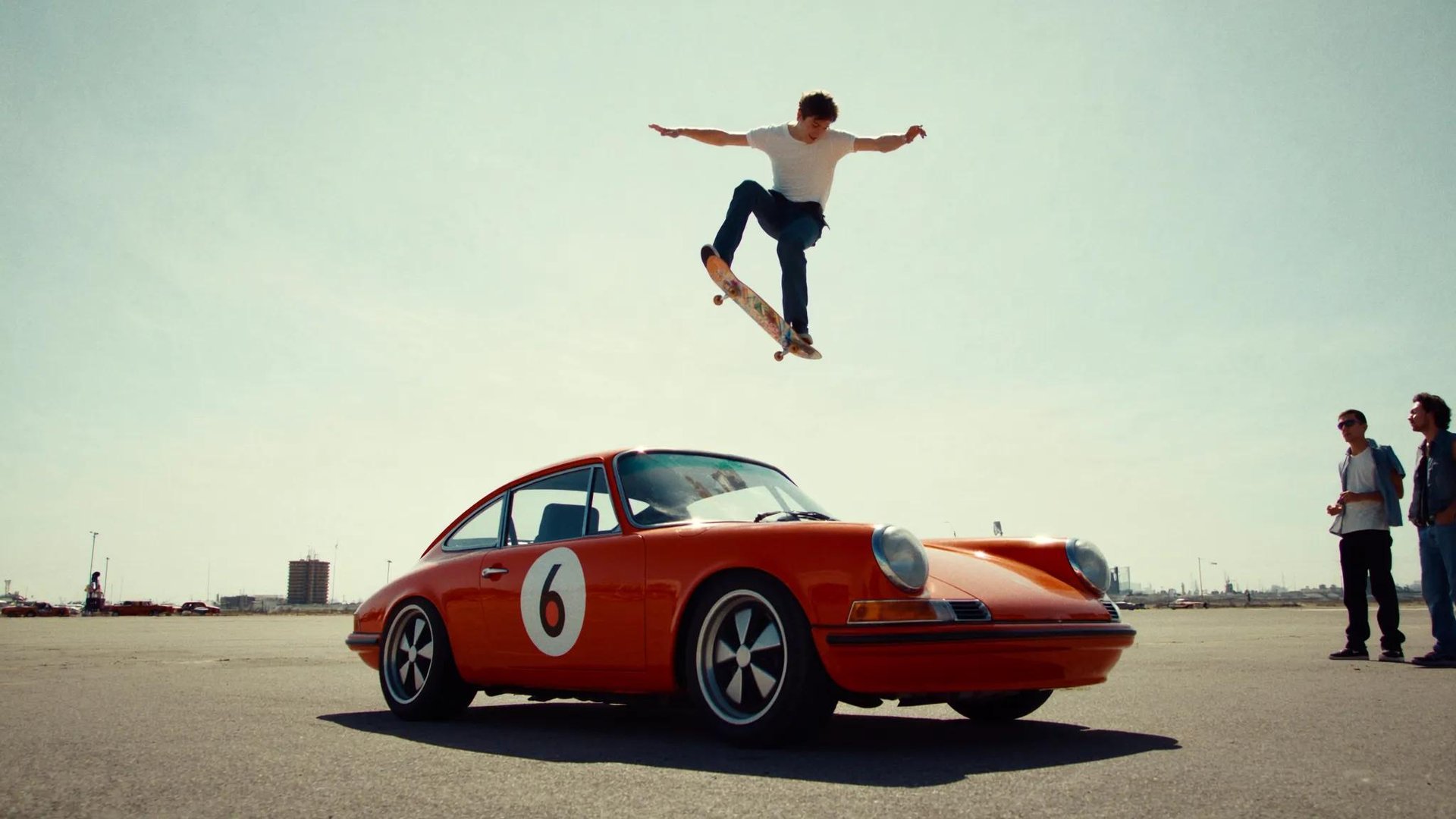
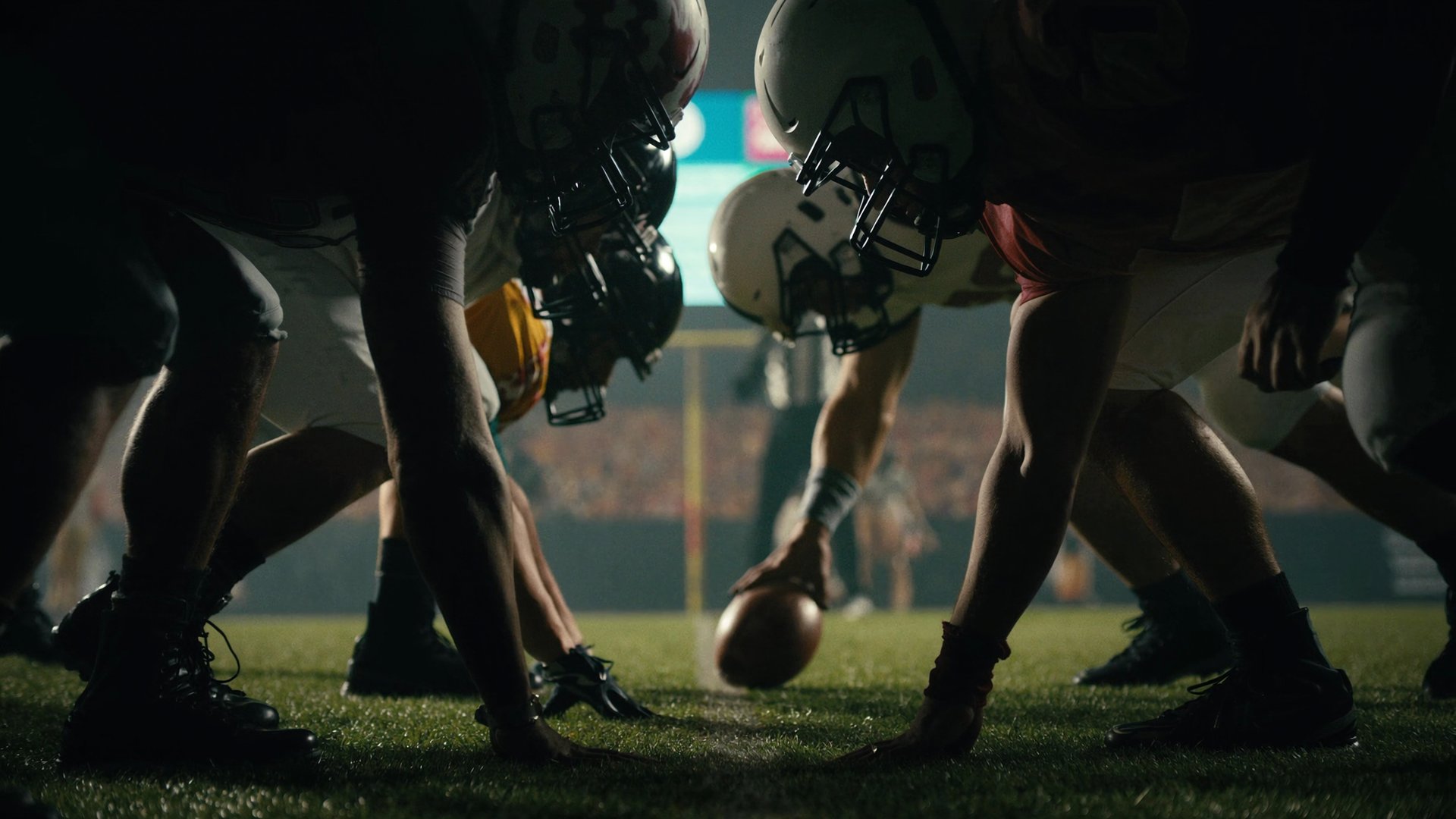
The camera body is locked on the fixed tripod at [lens height]; the only motion is one smooth continuous horizontal rotation LEFT of about [90] degrees across the full shot, no travel, no dolly, no truck, no arc, no zoom, no tilt. Constant unhurried rotational speed with a gentle settle in the final half second, timed so the landing composition and [the landing event] arrive together. The horizon stays level throughout; new space enters from the left frame edge only through rotation. End: settle on a clear final composition and hold.

Dolly. The camera physically travels toward or away from the subject along a straight line, a real change in distance. That's why a dolly-in builds intimacy and tension as the distance closes, in a way a zoom never quite manages.

Slow dolly in toward a woman reading by a window, constant speed, settling into a static hold.

Run it in Cinema Studio with Aperture and Lens fixed and the approach reads the same on every pass, since depth of field never drifts mid-move.

One continuous decisive dolly in on straight ground rails, pure forward travel at constant speed along the axis toward the subject, at a locked constant lens height of [1.5] meters, decelerating smoothly into a static hold at the end framing. The field of view never changes, no zoom: the perspective shifts because the camera physically approaches, near objects sweeping out past the frame edges with strong parallax. No pan, no tilt, no crane, no handheld drift; dead-level travel from first frame to last.

Zoom. The lens itself changes focal length, compressing or expanding the frame while the camera stays completely still. This is the move to reach for when you want the space itself to feel like it's collapsing inward.

Slow optical zoom out from a lighthouse at dawn, camera locked on a tripod, no travel.

The prompt carries the zoom; Lighting and Lens character stay parameterized in Cinema Studio, so only the framing changes between the first and last frame.

Locked tripod bolted in place, zero rotation, zero travel, the entire move is inside the lens: a purely OPTICAL zoom out, a focal-length pull from telephoto to wide on a stationary camera, exactly like a photographer standing in one spot and slowly turning the zoom ring. One single perfectly even continuous zoom from [18] degrees to [84] degrees across the entire duration, no speed changes, no steps, no drift. NOT a dolly out, NOT a pull-back, NOT a track backward, no rearward travel, no crane, no jib, no pedestal, no drone pull-away, no floating retreat; the camera's position and height are identical in the first and last frame. ZERO parallax: the far background keeps the exact same apparent size relative to the subject from the first frame to the last, and new space enters the picture only at the frame edges as the view opens.

Orbit. The camera travels in a circular path around the subject while that subject stays locked at the center of the frame, revealing it from every angle in one continuous move. This is the go-to move for product reveals and hero shots where the viewer needs to see all sides of something without a single cut.

Slow 360 orbit around a perfume bottle on a marble table, subject centered, constant radius.

Set Lens to Clinical Sharp in Cinema Studio for a clean product read or Anamorphic for a theatrical one; the orbit line itself stays the same.

One continuous 360-degree orbit, the camera travels a full circle around the subject on a locked constant radius of [2.5] meters at a locked constant height, panning continuously to keep the subject dead-center at constant size, one full revolution in ONE direction at one constant angular speed, returning exactly to the opening framing at the end. The subject stays planted, facing one fixed direction in the world the entire time, it is the camera that circles them; the background streams continuously through the full compass behind their shoulders. No radius drift, no height drift, no speed changes, no reversal, no turntable effect where the subject spins in place.

Tracking. The camera moves alongside a subject that is also moving, holding a consistent distance and relative position as both travel through the scene together. Use this whenever the subject's motion is the point and the camera should feel like it's running the same path.

Lateral tracking shot following a cyclist along a canal, strict side view, constant distance.

Pair the tracking line with a locked Cinema Studio Lighting preset and the exposure logic stays steady while the background streams past.

One continuous lateral tracking move, the camera glides parallel to the subject at exactly the speed that keeps their framing constant, strict 90-degree side view at all times. Three clean parallax layers: nearest, [posts / mullions / table edges] sweeping fast past the lens, briefly occluding the subject; middle, the subject, constant size at frame center; farthest, [the background row] sliding by slower behind. No zoom, no pan drift, no push-in.

What a Fully Dialed-In Shot Costs

What a Fully Dialed-In Shot Costs

What a Fully Dialed-In Shot Costs

Clip length

720p

1080p

4 seconds

~$1

~$2

8 seconds

~$2

~$4

15 seconds

~$3.75

~$7.50

Generation cost scales with clip length and resolution, and the exact number always shows before you commit to generating. The practical habit worth building: test a camera move at 720p first, since movement, focus shifts, and pacing all render correctly at that resolution, then spend the extra credits on a full 1080p pass once the shot is confirmed.

How Camera Movement Actually Gets Controlled

If you take one thing away from all of this, it's that controlling a camera in AI video comes down to a handful of decisions made before generation:

  • Genre decides the physical logic of the whole shot before anything else kicks in
  • Lighting presets like Contre-jour, Practicals, and Soft Cross fix exactly where the light comes from
  • The movement itself is written explicitly in the prompt, with speed, path, and end framing stated in plain terms, while Camera MoveSet Style sets the register that movement executes in
  • Lens, focal length, and aperture decide what that movement ends up meaning, since the same orbit can look like a clean product demo or a full cinematic reveal depending entirely on the glass behind it

None of that is extra polish on top of the generation. It's the actual information the model needs so it can stop guessing. Lock those things in once and the difference shows immediately: your tenth generation looks like your first one, and a shot that used to take six tries comes out the way you meant it the first time.

Where the Suite Comes Together

The full cinematic parameter set, genre, color palette, lighting, camera movement style, lens, focal length, and aperture, is specific to the Cinema Studio models. The generation panel itself is shared across Higgsfield's AI-native creative suite: the same workspace also runs Seedance 2.0, Kling 3.0, Veo 3.1, and WAN 2.7, so switching models for a different shot does not mean switching tools or re-uploading assets.

Character consistency works the same way inside that workspace. Soul ID characters attach to a generation through Elements, so a sequence can hold the same person across shots while Cinema Studio holds the camera logic, from the first clip to the last.

How to Control Camera Movement, Angles, and Lens in AI Video

Open Cinema Studio

Got any questions left?

A dolly physically moves the camera through space. A zoom changes the lens's focal length without moving the camera. They can look similar in a still frame, but behave very differently once either one starts moving.

The prompt leaves the physical properties of the move, speed, distance, path, unspecified, so the model fills in those properties differently every time. Stating them explicitly in the prompt and fixing the surrounding settings removes the variance.

Yes. Lens character controls how light behaves and how compressed the space feels, independent of how the camera moves. The same movement can read as clinical or cinematic depending on the lens behind it.

Genre sets the physical logic the model applies to the whole shot: how light behaves, how the camera relates to the scene, what framing conventions get used. It changes the physical register, not just the mood.

A lighting preset is a physics parameter the model builds from. A text description is interpreted fresh each time and can vary. The preset is a hard constraint. The text is a suggestion.

Keep Camera MoveSet Style, lens, and lighting locked across every shot and reuse the same movement wording in the prompt. Recreate reruns the exact prompt, so the move lands the same way each time.

by Higgsfield

EXCLUSIVE OFFER
Ends in 14:59

15 Days of Ultra — On Us

Unlock the full power of Higgsfield AI. Generate unlimited videos, images, and audio with all 30+ premium models — completely free for 15 days.

8 parallel generations
Seedance 2.0 & Kling 3.0
Unlimited generations
No credit card needed
All 30+ AI models
Cancel anytime
Claim Your Free Trial
No commitment required 2,847 trials started today